What Is Proof of Stake vs Proof of Work? Simple Guide

Understanding what is proof of stake vs proof of work is very important in crypto today. These systems are part of a blockchain consensus mechanism. They help a decentralized network stay secure and trusted. They also manage cryptocurrency validation, transaction verification, and block creation on a distributed ledger.
Proof of Work and Proof of Stake are two different ways to run blockchain networks. Each method has its own process, benefits, and risks. In this guide, you will learn what is proof of work, what is proof of stake, and the full difference between PoW and PoS in simple and clear language.
What Is Proof of Work in Blockchain
When we explain what is proof of work, we refer to a system that uses mining. It was first introduced with Bitcoin. It relies on the crypto mining process to validate transactions.
In this system, validators and miners compete to solve complex problems. This is a key part of mining vs staking. The winner completes transaction verification and adds a new block through block creation. This process helps secure the distributed ledger.
What Is Proof of Stake in Blockchain
Now let’s understand what is proof of stake. This system replaces mining with staking. It is a newer and more efficient blockchain consensus mechanism.
Users lock their coins to become validators. These validators and miners are selected based on how much they stake. After successful transaction verification, they earn staking rewards. This system is faster and uses less energy.
Difference Between PoW and PoS
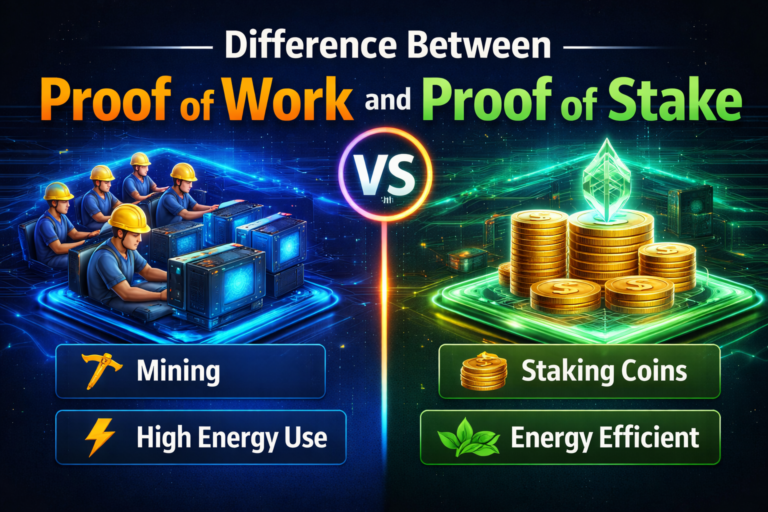
The difference between PoW and PoS is simple and clear. Proof of Work uses the crypto mining process, while Proof of Stake uses staking. This explains the idea of mining vs staking.
Proof of Work depends on hardware and electricity. Proof of Stake depends on coin ownership and staking rewards. Both systems support a decentralized network and maintain a secure distributed ledger through block creation.
How Cryptocurrency Validation Works
Both systems perform cryptocurrency validation, but in different ways. In Proof of Work, miners validate transactions using computing power.
In Proof of Stake, validators confirm transactions based on their stake. In both cases, transaction verification ensures that data added to the distributed ledger is accurate and secure.
Role of Validators and Miners
The role of validators and miners is very important. In Proof of Work, miners solve problems. In Proof of Stake, validators confirm transactions.
They are responsible for block creation and maintaining the blockchain consensus mechanism. Without them, a decentralized network cannot operate correctly.
PoS vs PoW Advantages
There are several PoS vs PoW advantages. Proof of Stake is energy-efficient and faster. It improves the speed of transaction verification and reduces costs.
Proof of Work offers strong security. It protects the blockchain consensus mechanism using high computing power. It is trusted for large networks and long-term reliability.
PoW vs PoS Disadvantages
There are also PoW vs PoS disadvantages to consider. Proof of Work uses a large amount of electricity. The crypto mining process is costly and slower.
Proof of Stake can lead to centralization. Large holders may control the decentralized network. This can impact fairness in block creation and validation.
Which Is Better PoW or PoS
Many people ask which is better PoW or PoS. The answer depends on your goals. Both systems support a secure blockchain consensus mechanism.
Proof of Work is better for maximum security. Proof of Stake is better for speed and low cost. Both maintain a reliable distributed ledger and smooth transaction verification.
Future of Blockchain Consensus Mechanism
The future of crypto will include both systems. Proof of Stake is growing fast because it is efficient. Many new projects use this blockchain consensus mechanism.
Proof of Work will remain important for highly secure networks. Both systems will continue to support cryptocurrency validation and power the decentralized network.
Conclusion
Now you clearly understand what is proof of stake vs proof of work is and how they work. These systems are the foundation of blockchain technology. They manage transaction verification, block creation, and security in a distributed ledger.
The difference between PoW and PoS is simple. One uses mining, and the other uses staking. Both have strengths and weaknesses. If you want to learn more about crypto and improve your knowledge, explore more guides on our blog and stay updated.
FAQs About What Is Proof of Stake vs Proof of Work?
1. What is proof of stake vs proof of work?
It refers to two systems used for cryptocurrency validation. One uses mining, and the other uses staking.
2. What is proof of work?
It is a system that uses the crypto mining process to validate transactions and add new blocks.
3. What is proof of stake?
It is a system where users stake coins and earn staking rewards for validating transactions.
4. What is the difference between PoW and PoS?
The difference between PoW and PoS is mining vs staking. One uses machines, the other uses coin ownership.
5. Which is better, PoW or PoS?
It depends on your needs. PoW offers strong security, while PoS offers speed and efficiency.