
Difference Between Proof of Work and Proof of Stake: Simple
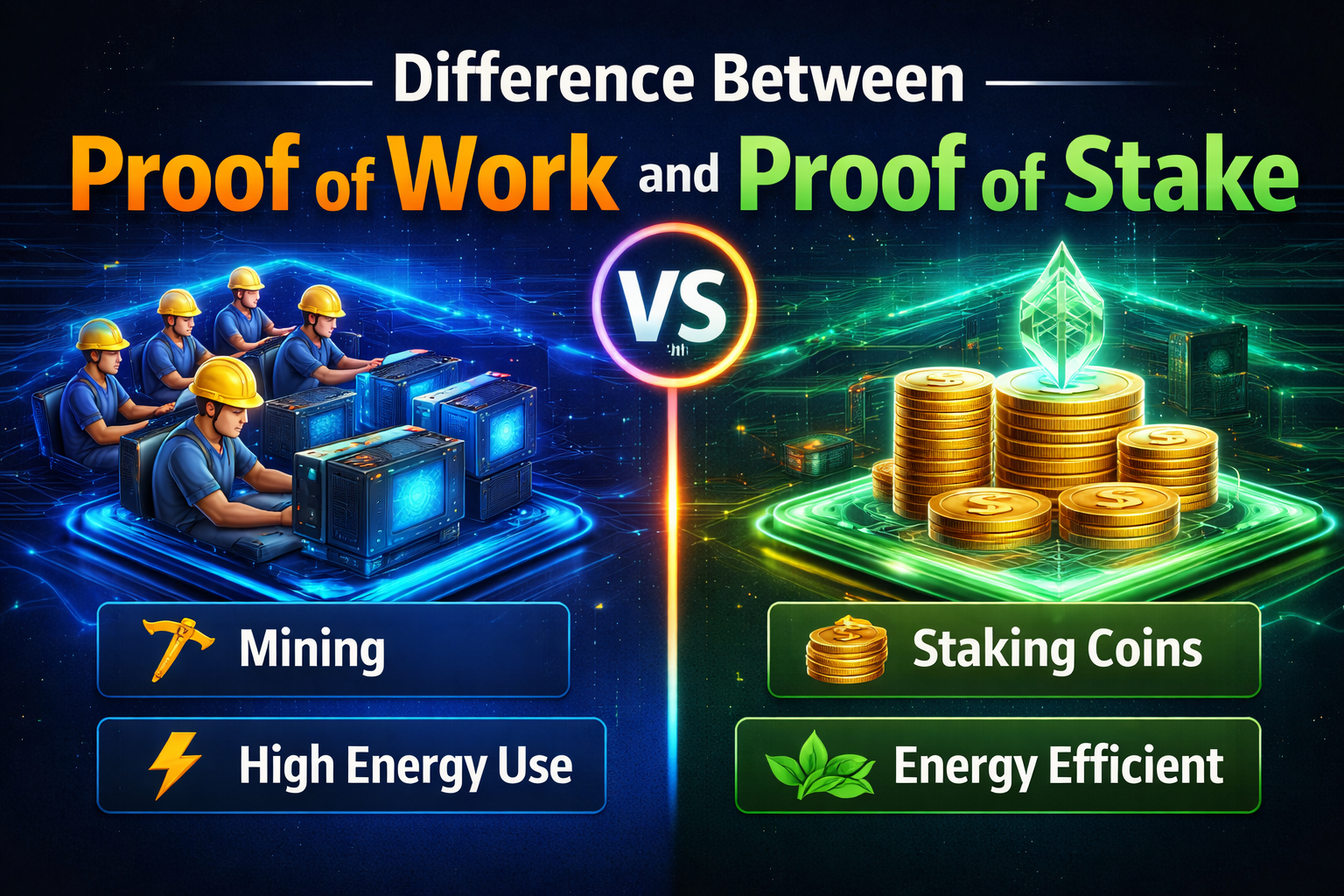
The difference between proof of work and proof of stake is a key concept in cryptocurrency. Every blockchain needs a system to verify transactions. This system is called consensus. It helps networks work without a central authority. To understand this better, you must know why blockchain needs consensus. Blockchain works on decentralized systems without a central authority, so no single person controls it. Every transaction must be verified by the network. This ensures secure crypto transactions and strong blockchain network security.
Table of Contents
What is Proof of Work (PoW)
The difference between proof of work and proof of stake simply begins with Proof of Work. It is the first system used in blockchain. Bitcoin uses this method. To explain how proof of work works, miners solve difficult problems using cryptographic puzzle solving. This requires high hash power and computing power. These puzzles are part of the block validation process. Once solved, transactions are confirmed through transaction verification on the blockchain. This system is secure but uses a lot of energy.
What is Proof of Stake (PoS)
The difference between proof of work and proof of stake also includes Proof of Stake. It is a modern system that replaces mining. To understand how proof of stake works, users stake their coins. The network uses a validator selection process to choose a validator. This validator confirms transactions. In return, they earn staking rewards in crypto. This method improves blockchain network security and uses much less energy.
Difference Between Proof of Work and Proof of Stake
The difference between proof of work and proof of stake to be understood. One uses mining, while the other uses staking. Both systems support decentralized network security.
| Feature | Proof of Work | Proof of Stake |
| Method | Mining | Staking |
| Energy | High | Low |
| Speed | Slow | Fast |
| Cost | Expensive | Low |
| Security | Very Strong | Strong |
How Proof of Work Works in Blockchain
To explain how proof of work works, miners collect transactions into a block. Then they solve puzzles using cryptographic puzzle solving. This requires strong hash power and computing power. Once solved, the block is added to the blockchain. The miner earns rewards through the mining reward system. This ensures transaction verification on the blockchain and strong decentralized network security.
How Proof of Stake Works in Blockchain
To explain how proof of stake works, users lock their coins in the network. The system runs a validator selection process to choose one validator. That validator confirms transactions. After validation, they earn staking rewards in crypto. This method improves blockchain network security and supports secure crypto transactions with low energy usage.
Advantages of Proof of Work vs Proof of Stake
The difference between proof of work and proof of stake is also simple and includes benefits. Proof of Work is highly secure. It uses cryptographic puzzle solving to protect data. The block validation process is strong and reliable. Proof of Stake is faster and more efficient. It supports secure crypto transactions and works well in decentralized systems without a central authority. It also reduces energy costs.
Disadvantages of Proof of Work vs Proof of Stake
The difference between proof of work and proof of stake shows drawbacks. Proof of Work uses a lot of electricity. It requires expensive machines. The mining reward system also creates high competition. Proof of Stake can favor users with more coins. The validator selection process may not always be fair. However, it still provides strong blockchain network security.
Which is Better: Proof of Work or Proof of Stake
The difference between proof of work and proof of stake simply helps you decide which is better. Proof of Work is ideal for maximum security. It depends on hash power and computing power. Proof of Stake is better for speed and cost. It supports fast and secure crypto transactions. Most modern blockchain systems now prefer Proof of Stake.
Conclusion
The difference between proof of work and proof of stake simply comes down to mining versus staking. Proof of Work uses computing power and energy. Proof of Stake uses coins and efficiency. Both systems help in transaction verification on the blockchain and protect networks. However, the future is moving toward Proof of Stake because it is faster, cheaper, and more eco-friendly. If you are starting in crypto, learn both systems and choose the one that fits your goals.
FAQs About the Difference Between Proof of Work and Proof of Stake
1. What is the difference between proof of work and proof of stake, simply?
Proof of Work uses mining and computing power, while Proof of Stake uses staking and validators.
2. Which is better,r PoW or PoS?
PoW is more secure, but PoS is faster and cheaper.
3. Why does Proof of Work use more energy?
Because it uses cryptographic puzzle solving and high computing power.
4. Is Proof of Stake safe?
Yes, it offers strong blockchain network security.
5. Can beginners use Proof of Stake?
Yes, it is simple and does not require expensive hardware.