 Bitcoin
  Ethereum
  Tether
  BNB
BNB  XRP
XRP  USDC
USDC  Solana
  TRON
TRON  Lido Staked Ether
  Figure Heloc
  Dogecoin
  USDS
USDS  WhiteBIT Coin
  Bitcoin Cash
  LEO Token
  Wrapped stETH
  Cardano
  Hyperliquid
  Wrapped Bitcoin
  Chainlink
  Binance Bridged USDT (BNB Smart Chain)
  Monero
  Wrapped Beacon ETH
  Ethena USDe
  Canton
  Stellar
  Wrapped eETH
  USD1
USD1  Dai
Dai  sUSDS
sUSDS  Zcash
Zcash  Litecoin
  MemeCore
  Coinbase Wrapped BTC
  Rain
Rain  PayPal USD
  Avalanche
  WETH
WETH  Hedera
  Shiba Inu
  Sui
Sui  USDT0
USDT0  Toncoin
  Cronos
  Bittensor
  World Liberty Financial
  Circle USYC
  Tether Gold
  PAX Gold
  Ethena Staked USDe
 Ether, Solana, XRP Commodity Status 2026 Explained
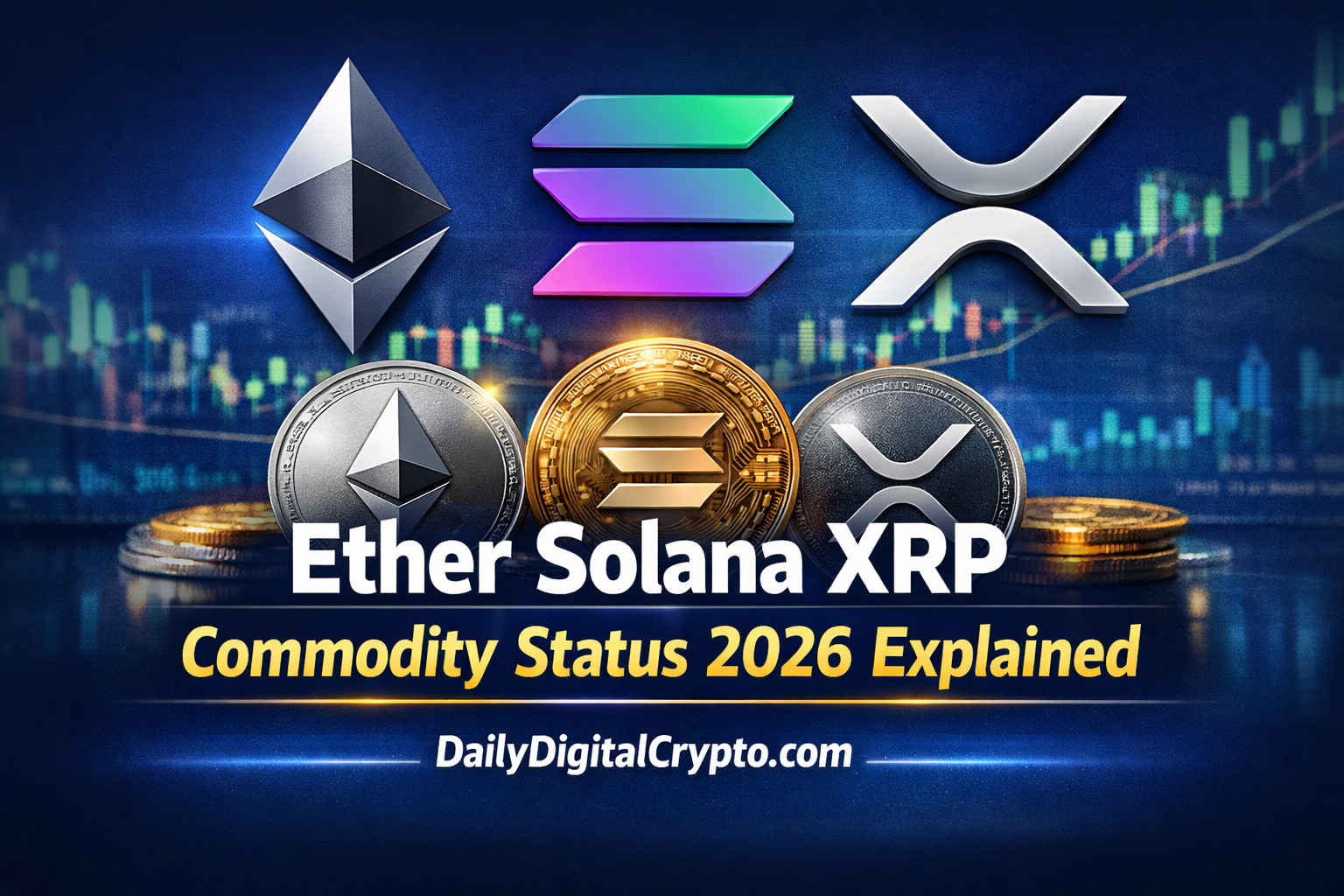
The Ether, Solan, and XRP commodity status in 2026 is a key topic for crypto investors today. In 2026, new laws are changing how digital assets are classified and regulated. Investors want clear rules to reduce risk and make better decisions. This is where Regulatory Clarity plays an important role. Ether, Solana, and XRP are now moving toward Digital Commodities status instead of securities. This shift is supported by policies like the CLARITY Act of 2026. It also increases Institutional Adoption as large investors enter the market. Understanding these changes can help you stay ahead in the fast-growing crypto industry.
Table of Contents
Ether, Solana, XRP Commodity Status 2026 Overview
The Ether, Solan, and XRP commodity status 2026 shows a strong shift in crypto regulation. Many experts now treat these assets as Digital Commodities instead of securities. This change reduces confusion in the market. New laws like the CLARITY Act 2026 are helping define crypto rules. This improves Regulatory Clarity and builds trust among investors, especially in the US market.
Ether Commodity Status 2026 and Digital Commodities
Ether is widely recognized as a Digital Commodities asset in 2026. It does not meet the Howey Test Criteria because it is decentralized and not controlled by a single group. This classification supports strong Institutional Adoption. It also increases the chances of Spot ETF Approval, which can bring more capital into Ethereum.
Solana Commodity Status 2026 as Non-security Crypto Assets
Solana is moving toward classification as Non-security Crypto Assets. Its network is becoming more decentralized, which supports this change. However, Market Volatility remains a concern. Prices often react quickly to regulatory news, but better clarity can improve stability over time.
XRP Commodity Status 2026 and Regulatory Clarity
XRP has gained progress in legal clarity. It is now closer to being recognized as Non-security Crypto Assets after important court decisions. This improves Regulatory Clarity and increases Institutional Adoption, especially in banking and global payments.
SEC vs CFTC Jurisdiction in 2026
The debate around SEC vs. CFTC Jurisdiction is central to crypto regulation. The SEC handles securities, while the CFTC regulates commodities. In 2026, more assets are moving toward CFTC oversight. This supports the growth of Digital Commodities and reduces strict regulations.
Howey Test Criteria and Crypto Classification
The Howey Test Criteria are used to decide if an asset is a security. It checks if profits depend on a central group. Ether, Solana, and XRP are more decentralized now. That is why they are considered Non-security Crypto Assets, which reduces legal risks.
Secondary Market Trading Rules in 2026
The rules for Secondary Market Trading are clearer in 2026. Investors can easily trade crypto on platforms like Binance. This improves user confidence and reduces confusion. It also supports global crypto adoption.
Tokenized Securities vs Commodities Explained
The difference between Tokenized Securities vs. Commodities is now easier to understand. Securities represent ownership, while commodities are tradable assets. The CLARITY Act of 2026 provides better definitions. This helps regulators and investors understand the market clearly.
Spot ETF Approval and Institutional Adoption Impact
Commodity status increases the chances of Spot ETF Approval. ETFs allow investors to enter the market easily. This also boosts Institutional Adoption. Large companies and banks are investing more in crypto assets.
SEC Chair Paul Atkins and Market Volatility
SEC Chair Paul Atkins has played a major role in crypto regulation. His guidance improved Regulatory Clarity in 2026. However, announcements also caused Market Volatility. Prices moved quickly after major updates, showing how sensitive the market is.
Future Outlook for Ether, Solana, XR, P: Commodity Status 2026
The future looks positive for crypto regulation. Ether is stable as a commodity. Solana is improving, and XRP is gaining more clarity. With support from the CLARITY Act 2026 and rising Institutional Adoption, the market is expected to grow steadily.
FAQs: Ether, Solana, XRP Commodity Status 2026 Explained
1. Are Ether, Solana, and XRP commodities in 2026?
Ether is widely considered a commodity, while Solana and XRP are moving toward Non-security Crypto Assets status.
2. Why is crypto classification important?
It affects regulations, taxes, and investor confidence.
3. What is the Howey Test?
The Howey Test Criteria are used to determine if an asset is a security.
4. Will crypto ETFs grow in 2026?
Yes, Spot ETF Approval is more likely with commodity classification.
5. Who regulates crypto in 2026?
The decision depends on the SEC vs. CFTC Jurisdiction.
Conclusion
The Ether, Solan, and XRP commodity status 2026 highlights a major shift in crypto regulation. These assets are moving toward Digital Commodities, which reduces risk and builds trust. Strong Regulatory Clarity and growing Institutional Adoption are shaping the future of crypto. If you want to succeed in crypto investing, stay updated with the latest trends and regulations. Visit our website regularly for expert insights and guides.