How Long Does a Bitcoin Transaction Take? Updated 2026 Guide

Many users ask how long does a Bitcoin transaction take. Bitcoin is the most widely used cryptocurrency in the world. But its transfers are not instant. The time depends on fees, network congestion, block confirmations, and wallet type. A high fee and proper timing can speed up a transfer. Low fees and busy networks can delay it. Understanding Bitcoin network congestion, block time (10 minutes), mining and block inclusion, and transaction priority and fees is essential. This guide explains the factors affecting Bitcoin transaction speed, the role of network throughput, block propagation time, scalability limits, TPS rate comparison, and practical tips to make transfers faster and more secure.
Table of Contents
How Bitcoin Transactions Work
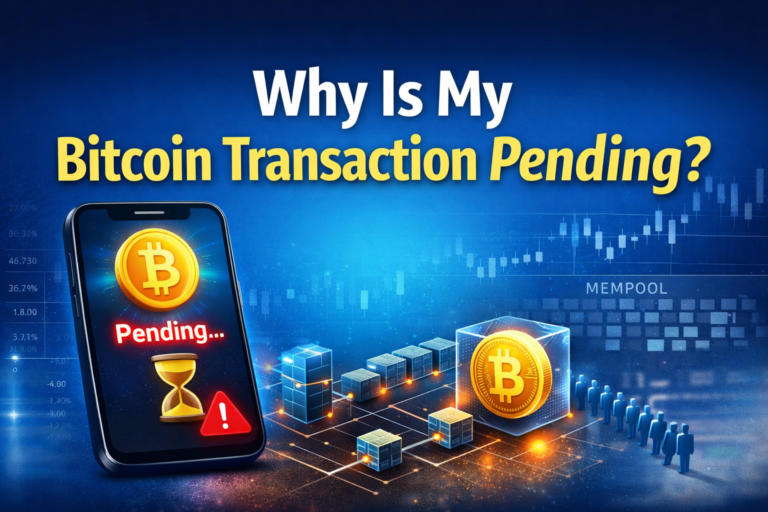
A Bitcoin transaction moves coins from one wallet to another. Each transaction is recorded on the blockchain. Miners verify transactions through mining and block inclusion. Every transfer waits in the mempool until a miner includes it in a block.

Each block is generated approximately every block time (10 minutes). Transactions with higher transaction priority and fees are included first. The blockchain tries to maintain blockchain scalability, but high traffic can delay processing. Knowing these basics helps you understand how long a Bitcoin transaction will take and why timing matters.
Bitcoin transactions are public on the blockchain, but users remain anonymous. This ensures security and transparency. Miners compete to add transactions, which is why fees matter. A transfer with low fees may take multiple block times to confirm, while higher fees are processed faster.
Factors Affecting Bitcoin Transaction Speed
Several factors influence transaction speed. Bitcoin network congestion is one of the main ones. When many users send Bitcoin at the same time, the mempool fills. This can delay confirmations for hours if traffic is high.
Fees are another key factor. Miners prioritize transactions with higher fees. Using fee estimator tools can help you pick an appropriate fee based on network conditions. Network Speed & Capacity, including network throughput, block propagation time, scalability limits, TPS rate comparison, directly affects timing. High congestion means slower transactions, even for higher fees.
The size of the transaction in bytes also matters. Multiple inputs or outputs make a transaction larger, increasing fees and processing time. SegWit-enabled wallets can reduce size and speed up confirmations.
Confirmations and Security
After a transfer is included in a block, it receives confirmations. The first confirmation usually takes about 10 minutes. Many platforms require multiple confirmations for security. This ensures Security & Confirmation Trust.
Bitcoin transactions are irreversible transactions. Once fully confirmed, the settlement finality guarantees the transfer cannot be reversed or altered. Typically, one to three confirmations are enough for small payments, while six confirmations are recommended for large transfers.
Using more confirmations increases security but also increases wait time. Exchanges and wallets balance speed and safety by setting confirmation requirements based on transaction size.
Tools to Track Bitcoin Transactions
You can track transactions using block explorers. Enter the transaction ID (TXID) to check its status and confirmations. Real-time mempool visualization shows pending transactions. Live network capacity dashboards provide insights into network congestion.
Monitoring these tools helps you pick the best fee and time for transfers. Wallets with smart fee recommendations reduce wait times. Observing Bitcoin network congestion and mempool length is important, especially during high market activity.
How to Speed Up Bitcoin Transactions
To speed up a transfer, you can increase the fee. Miners are more likely to pick your transaction for the next block. Wallets that automatically calculate fees can help save time.
Layer-2 solutions like the Lightning Network and off-chain settlements allow faster transactions. They process transfers off the main chain and settle later. This improves blockchain scalability and reduces waiting time for everyday transactions.
Sending at off-peak times is also effective. Checking network throughput and mempool size helps you avoid congestion. Higher priority transactions are added sooner, shortening overall wait times.
Mempool Visualization and Network Speed
The mempool is a holding area for unconfirmed transactions. If it is crowded, transfers take longer. Using mempool visualization tools helps you understand traffic.
Real-time monitoring of Network Speed & Capacity and mempool size allows you to plan transfers. This is particularly useful for high-value transactions. Smart fee adjustments based on live network data reduce the chance of delays.
Comparing Bitcoin With Other Cryptocurrencies
Bitcoin’s 10-minute block time can seem slow compared to newer cryptocurrencies. Ethereum, Litecoin, and Bitcoin Cash often confirm faster. However, Bitcoin prioritizes security and decentralization.
Even though Bitcoin is slower, it provides strong Security & Confirmation Trust. With proper fee management and Layer-2 solutions, Bitcoin can achieve fast and secure transfers comparable to other networks.
Layer-2 Solutions and Enhancements
Layer-2 solutions improve speed by processing transactions off-chain. The Lightning Network allows instant transfers for daily use. Off-chain settlements reduce congestion on the main blockchain and lower fees.
These enhancements increase blockchain scalability and provide a smoother user experience. Using Layer-2 is ideal for small daily payments while the main blockchain handles large transactions with high confirmation security.
Tips for Faster Bitcoin Transfers
Plan transfers when the network is less busy. Avoid peak traffic periods to reduce waiting time. Use fee estimator tools and watch live network capacity.
For everyday small payments, Lightning Network or off-chain settlements provide near-instant transfers. Using wallets that automatically select optimal fees ensures faster confirmations.
Always double-check recipient addresses. Remember, Bitcoin transactions are irreversible transactions once confirmed.
Table: Typical Bitcoin Transaction Times
| Confirmations | Time Estimate | Notes |
| 1 confirmation | ~10 minutes | Small transfers |
| 3 confirmations | ~30 minutes | Medium payments |
| 6 confirmations | ~60 minutes | Large or high-value transfers |
FAQs About How Long Does a Bitcoin Transaction Take
1. How long does a Bitcoin transaction take to confirm?
Typically, the first confirmation takes about 10 minutes. Multiple confirmations may increase total time.
2. Can Bitcoin transactions be reversed?
No. Bitcoin transactions are irreversible transactions once confirmed.
3. Why is my Bitcoin transaction pending for hours?
Low fees or high Bitcoin network congestion can cause delays. Fee estimator tools can help you optimize speed.
4. How many confirmations are needed for high-value transactions?
Six confirmations are recommended for large transfers to ensure settlement finality.
5. Are Bitcoin transfers faster than traditional bank payments?
Yes. Even with multiple confirmations, Bitcoin transfers are usually faster than international bank transfers, which can take days.
Conclusion
Understanding how long does a Bitcoin transaction take is important for safe and timely transfers. Transaction speed depends on Bitcoin network congestion, transaction priority and fees, mining and block inclusion, and network throughput. Using fee estimator tools, block explorers, and Layer-2 solutions like the Lightning Network helps you send Bitcoin faster and more securely. Start optimizing your Bitcoin transfers today. Avoid delays, pay smart, and keep your transactions safe.